For athletic directors · trainers · coaches
What Proof Should Teams Check Before Picking a Mouthguard?
Before a program standardizes on one mouthguard, check five things: league approval, who designed it, what the evidence actually shows, whether athletes keep it in, and who else uses it. NeuroGuard+ is NFHS approved for high school competition, uses a patented lower-teeth design from a dentist, and outfits rosters through NG+ Team Order.


Is the Mouthguard Legal in Your League?
League approval is the first signal to check, because a guard your officials won't allow is a guard your program can't use. For high school sports in the U.S., that means the National Federation of State High School Associations (NFHS). NeuroGuard+ is NFHS approved for high school competition, so an athlete can wear it in a sanctioned game, not only in practice.
State associations, club circuits, and combat-sport sanctioning bodies can layer their own rules on top of NFHS approval. Pull your league handbook before the season and match it against the brand's approvals. The NeuroGuard+ mouthguard rules by sport page lists the requirements sport by sport.
A guard that isn't approved can get an athlete pulled from a game, and it leaves your program defending a gear choice nobody can point to a standard for.
Who Designed It, and Is the Design Patented?
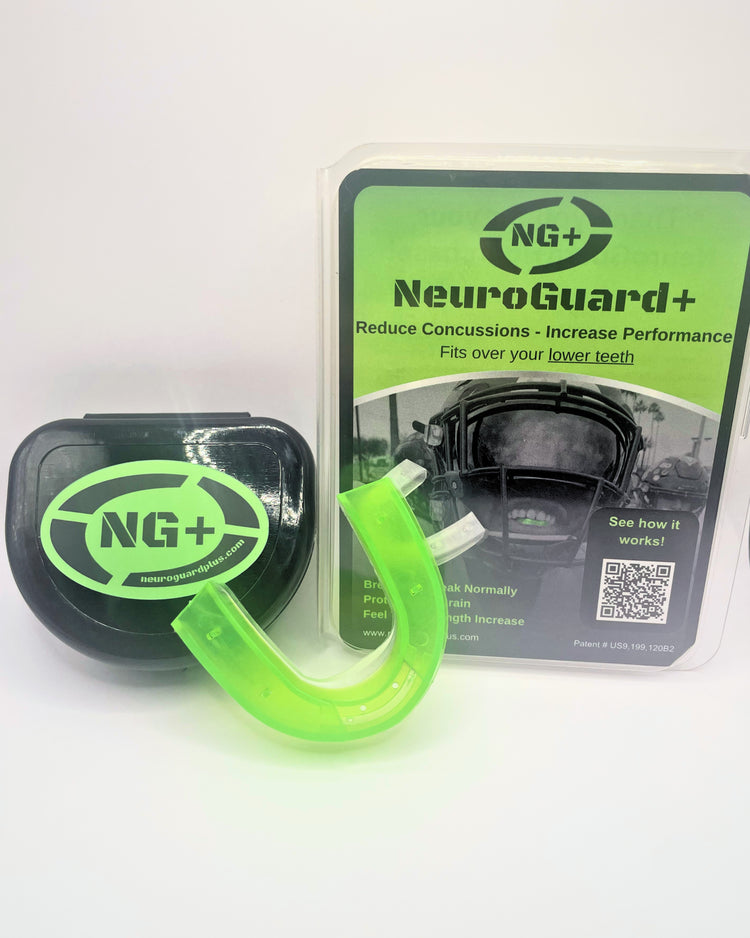
A credible performance mouthguard names the clinician behind it and can show a patent for what makes it different. NeuroGuard+ was designed by Dr. Michael Hutchinson, DDS, and its lower-fit design is patented. Instead of covering the upper teeth like the old mouthguard, NG+ sits on the lower teeth and holds the jaw in what the company calls its physiologic position.
The jaw position is the point of the design. NeuroGuard+ is built to keep the airway open and to absorb and redirect G-forces traveling through the jaw toward the brain. Ask any brand making a similar claim to name its designer, show the patent, and explain the mechanism in plain words. The NeuroGuard+ How It Works page walks through the jaw mechanics, including the temporomandibular joint (TMJ).
How Do You Tell Real Safety Proof From Marketing Hype?
Real proof is a study you can read, with the number of athletes, the sport, and what was measured, published where your athletic trainer can check it. Hype is a percentage with no source next to it. NeuroGuard+ publishes the field studies behind its concussion-risk findings on its Data & Research page, so your sports medicine staff can judge them directly.
Medical clearance is a separate question from evidence. NeuroGuard+ is not FDA-cleared. If your district or insurer requires an FDA-cleared device for any head-impact claim, the Q-Collar is cleared, though it is a neck collar worn alongside a mouthguard rather than in place of one.
No mouthguard is proven to prevent concussions.
That's the major medical consensus, and NeuroGuard+ says it plainly. Any brand that promises your athletes won't get concussed is selling past its evidence. Ask for the studies, read the methods, and judge the findings. Start with Do mouthguards prevent concussions?
Will Your Athletes Actually Keep It In?
The guard that protects is the one that stays in the mouth, so wearability belongs on your trust list next to approvals. Most mouthguards spend the game in a sock because athletes can't talk or breathe through them. NeuroGuard+ sits on the lower teeth, which leaves room to call plays and breathe through a full rep.
- Talk, breathe, and drink without pulling it out
- No clenching and no gagging
- One guard across football, wrestling, lacrosse, baseball, and more
For a trainer, that's a compliance number you can watch at practice. If guards are back in the sock by the second quarter, the brand's lab results don't matter.

What Proof of Athlete Adoption Should a Program Ask For?
Ask for named programs in your sport and level, how many athletes each one outfitted, and an athletic trainer you can call. Logos on a website are easy; a reference who will pick up the phone is the signal that matters. Shock Doctor wins many of these conversations on name recognition alone, so a newer brand like NeuroGuard+ should expect to show its references.
If a parent asks why your program picked this guard, "the rep said so" won't hold. A named peer program and a trainer reference give you a duty-of-care answer you can put in writing.
The Team Trust Scorecard
This scorecard lines up six signals a program should check before standardizing on a mouthguard, what to ask any brand for, and where NeuroGuard+ stands today. It includes the places where NeuroGuard+ falls short, so you can weigh them yourself.
| Signal | What to ask any brand | NeuroGuard+ |
|---|---|---|
| League approval | Which governing bodies approve it for competition? | NFHS approved for high school competition |
| Design credentials | Who designed it? Is the design patented? | Designed by a dentist (DDS); patented lower-fit design |
| Medical clearance | Is it FDA-cleared for any claim? | Not FDA-cleared |
| Evidence | Where are the studies, and who ran them? | Field studies published on the Data & Research page |
| Wearability | Can athletes talk and breathe with it in? | Sits on lower teeth; talk, breathe, and drink without removing it |
| Cost per athlete | What does one guard cost, and is there team pricing? | $49.97 single; roster pricing through NG+ Team Order |
When does another brand fit better? If your budget only covers $15 to $25 per athlete, a mass-retail guard like Shock Doctor protects teeth at that price. If your program needs an FDA-cleared device, look at the Q-Collar. If the goal is a talk-through-it guard with a brain-protection design and NFHS approval, NeuroGuard+ is built for that.
Questions Athletic Directors Ask
Short answers to what program buyers and retail buyers ask NeuroGuard+ most often.
Is NeuroGuard+ approved for high school sports?
Yes. NeuroGuard+ is NFHS approved for high school competition. State associations and leagues can add their own rules, so check your league handbook and the NeuroGuard+ mouthguard rules by sport page before the season.
Is NeuroGuard+ FDA-cleared?
No, NeuroGuard+ is not FDA-cleared. If your program requires an FDA-cleared device for head-impact claims, the Q-Collar is cleared, but it is a neck collar and does not replace a mouthguard.
Can any mouthguard prevent concussions?
No mouthguard, NeuroGuard+ included, is proven to prevent concussions, and major medical consensus says so. NeuroGuard+ publishes the field studies behind its concussion-risk findings on its Data & Research page so trainers can read them directly.
Does NeuroGuard+ fit over braces?
NeuroGuard+ sits on the lower teeth and the company says it is safe to wear with braces, adapting through orthodontic treatment. Athletes in active treatment should check with their orthodontist before the first practice.
What should a retail buyer check before stocking a premium mouthguard?
Look for league approval a parent can read on the package, a design story that explains the price in one line, and published evidence the store can point to. NeuroGuard+ carries NFHS approval and a patented lower-teeth design; ask NeuroGuard+ directly for sell-through and return data.
How does NG+ Team Order work for a full roster?
NG+ Team Order outfits a whole roster in one order, and each athlete molds their own guard at home in warm water. Contact NeuroGuard+ with your roster size for team pricing.
NG+ Team Order
Your Teeth Can Be Fixed. Your Brain Can't.
Send NeuroGuard+ your roster size and sport for NG+ Team Order pricing. Then send your trainer the research.