Retail partner program · NFHS approved
Stocking NeuroGuard+: A Retail Buyer's Proof Checklist
For sporting-goods buyers, team dealers, and shop owners weighing a premium mouthguard line. Here's the scorecard to hold every brand to, NeuroGuard+ included.
Before a premium mouthguard gets shelf space, ask any brand for four things: sell-through and return numbers, a margin worth the space next to $15 to $25 guards, league approval, and a safety claim tied to a named study. NeuroGuard+ brings a patented lower-teeth design, NFHS approval, and a $49.97 price to that conversation.

The scorecard
What Proof Does a Retail Buyer Need Before Stocking a Dentist-Designed Mouthguard?
You need proof it sells, proof it stays sold, and proof the safety story holds up when a parent or athletic trainer pushes back. Shock Doctor clears the first two on brand recognition alone. A newer brand like NeuroGuard+ has to put the numbers on the table instead. Hold every premium mouthguard line, NeuroGuard+ included, to the same five checks.
- 01
Sell-through
Units per door per month in stores like yours, and how long the line has been on shelves. Ask for the time period and store type behind every number.
- 02
Return rate
Bad molding drives mouthguard returns. Ask what share comes back, and what the brand gives shoppers to get the fit right the first time.
- 03
Margin
Put wholesale cost next to retail price, and both next to the $15 to $25 guards already in your aisle. Premium only earns its space if dollars per unit beat it.
- 04
League approval
Parents ask first: is my kid allowed to wear it? Ask which bodies approve the guard, by name. NeuroGuard+ lists NFHS approval for high school competition.
- 05
A sourced safety claim
Any concussion claim should point to a named study you can read. No source, no claim on your shelf tag.
Safety claims
How Do You Tell a Legit Youth Mouthguard From Safety Hype?
Check the claim against its source. Major medical consensus holds that no mouthguard is proven to prevent concussions, so any brand promising prevention is ahead of the evidence. A legit brand names its studies, says who ran them and on how many athletes, and lets you read them. Anything less is a slogan.
NeuroGuard+ makes a concussion-risk claim built on its lower-teeth design, which sets the jaw in what the company calls its physiologic position. NeuroGuard+ publishes the research behind that claim on its Data & Research page. Read it before you write shelf copy. Quote findings as study results, never as a guarantee, and you protect your store and the parents who trust it.
Name the study. Or drop the claim.
No mouthguard is proven to prevent concussions. A shelf tag that says what a study found, who ran it, and where to read it holds up at the counter. One that promises protection doesn't.
Why families pay more
What's Driving Premium Mouthguard Demand at Retail?
Parents are afraid of concussions, and they're shopping for gear that protects the brain as well as the teeth. That fear is why a $50 mouthguard gets picked up at all in an aisle of $15 guards. The second driver is plainer: kids hate bulky guards. They can't talk or breathe with one in, so it ends up in a sock or chewed to pieces, and the family is back buying another.
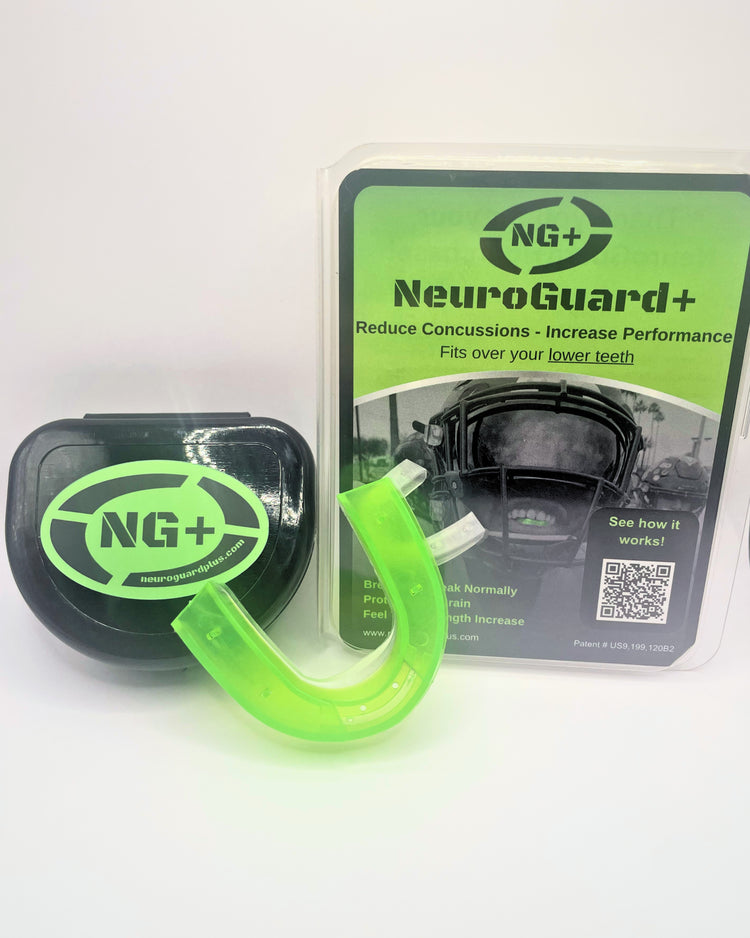
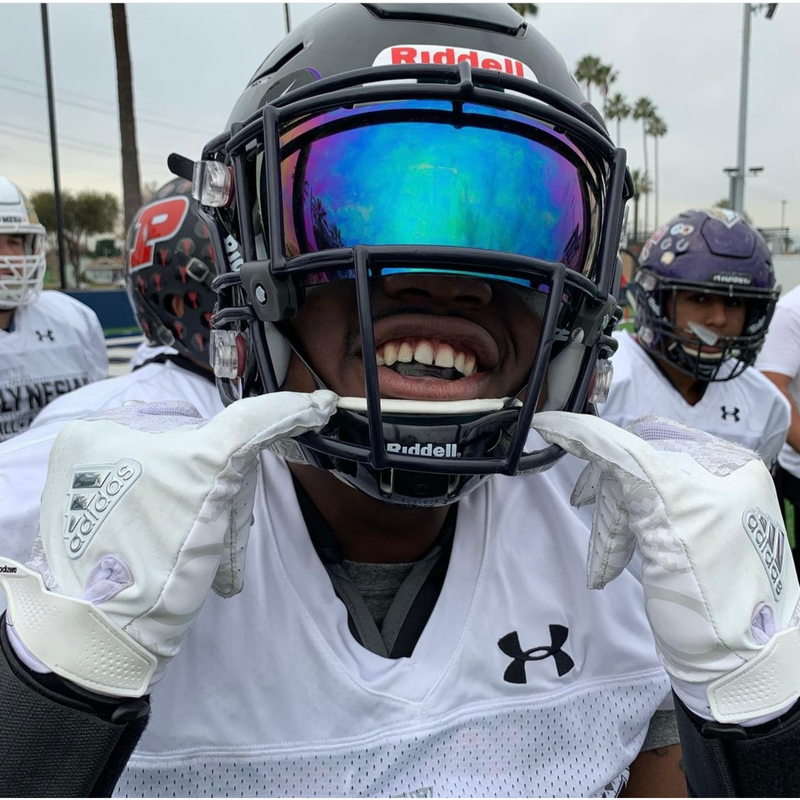
NeuroGuard+ answers both. It sits on the lower teeth, so athletes talk, breathe, drink, and call plays without pulling it out. One guard covers football, wrestling, lacrosse, hockey, rugby, basketball, and soccer, which keeps a multi-sport family on a single product. A single NeuroGuard+ Mouthguard is $49.97 with a case.
The risk, honestly
Is a Dentist-Designed Mouthguard Too Niche to Sell at Retail?
It's a real risk, and a manageable one if you plan for three things.
- Price
The first is price: at $49.97, NeuroGuard+ costs two to three times a $15 to $25 Shock Doctor guard, so it needs shelf talk that explains the gap.
- Evidence
The second is evidence: informed parents and athletic trainers will question the concussion story, so your staff should know where the research lives.
- Fit
The third is fit: an at-home molded guard that's molded wrong comes back.
NeuroGuard+ publishes a step-by-step guide, How To Fit The NG+, that you can point shoppers to at the register. Its design story is short and specific: a lower-teeth mouthguard designed by a dentist, Dr. Michael Hutchinson, DDS, with a patented lower-fit design. That gives your staff a true explanation a parent can repeat in the car.
Stock a premium guard without shelf talk and it hangs next to the $15 guard looking like the same piece of plastic at three times the price. Shoppers pick the cheap one, and the line gets cut before the season ends.
On the shelf
How Does NeuroGuard+ Compare With Shock Doctor, SISU, and OPRO?
Each brand wins a different shopper, and a strong mouthguard wall usually carries more than one. Shock Doctor is the better fit for price-first shoppers and quick replacement buys. SISU is the better pick for athletes who want the thinnest guard and don't need a concussion story. OPRO fits families who buy on brand prestige. NeuroGuard+ is for the parent or athlete asking about head impacts and performance, who'll pay more for a guard with a design story behind it.
| Brand | Price tier | Built around | Concussion claim | Best fit on your shelf |
|---|---|---|---|---|
| NeuroGuard+ | Premium, $49.97 | Lower-teeth guard that sets jaw position; patented design; talk-and-breathe fit | Yes: lower concussion risk, tied to its published research | Parents and athletes shopping on head-impact worry and performance |
| Shock Doctor | Value, about $15 to $25 | Impact absorption and dental protection; wide mass-retail availability | No | Price-first shoppers and quick replacements |
| SISU | Premium | Thin, remoldable custom-fit guard; comfort and talk-through wear | No | Athletes who want the thinnest, most comfortable guard |
| OPRO | Mid-premium | Layered dental protection; partner of major pro rugby and football bodies | No | Families who buy on brand prestige |
Retail partner program
How Do You Start Stocking NeuroGuard+?

NeuroGuard+ Mouthguard
One guard with its case, $49.97. The everyday peg item for parents and athletes.

NG+ DoublePack
Two guards in one box. A spare for the season, or one for each sibling.
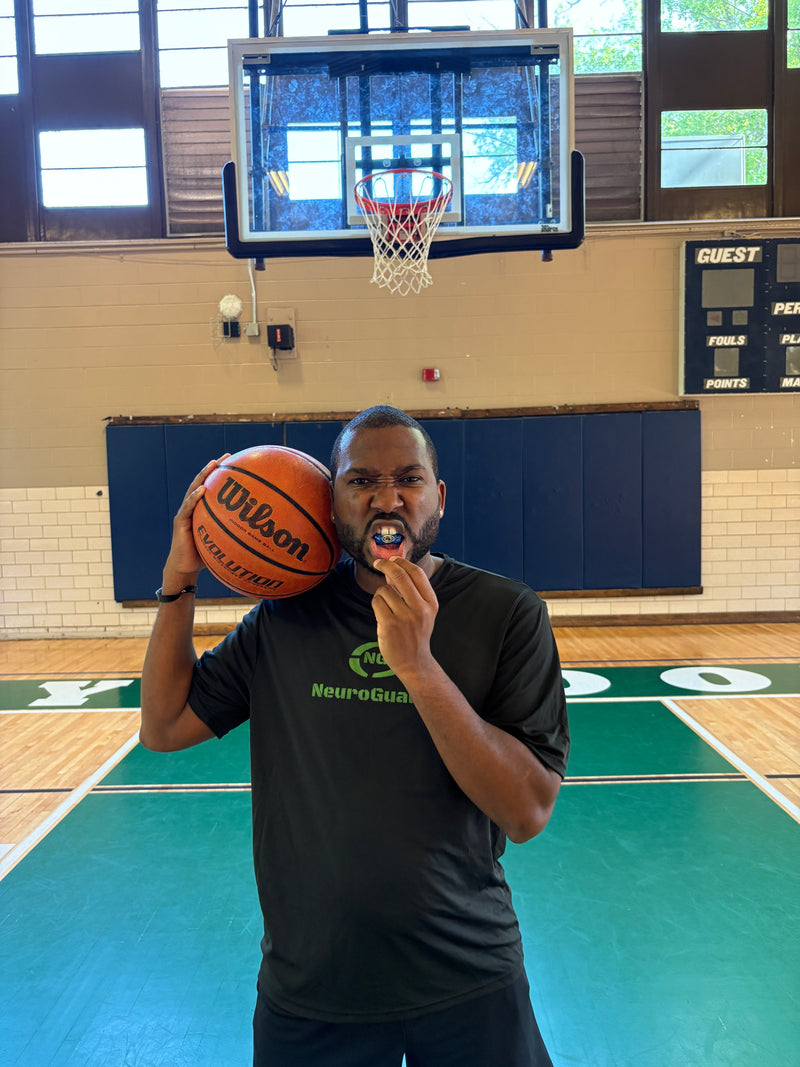
NG+ Team Order
For team dealers who outfit a whole roster in one order.
Shelf Talk You Can Use
These lines come straight from how NeuroGuard+ describes its mouthguard, and each one is something a parent can check.
- Sits on the lower teeth. Talk, breathe, and drink without taking it out.
- Mold it in warm water at home. No dentist visit.
- One guard for football, wrestling, lacrosse, hockey, and more.
- NFHS approved for high school competition.
- Designed by a dentist. Patented lower-fit design.
For your buyers and your staff
Questions Retail Buyers Ask About NeuroGuard+
These are the questions that come up when a store weighs NeuroGuard+, and the ones parents bring to the counter after it's on the shelf.
Does NeuroGuard+ prevent concussions?
No mouthguard, NeuroGuard+ included, is proven to prevent concussions, according to major medical consensus. NeuroGuard+ claims a lower concussion risk from its lower-teeth design and publishes the research behind that claim on its Data & Research page.
Is NeuroGuard+ allowed in high school sports?
NeuroGuard+ lists its mouthguard as NFHS approved for high school competition. Rules vary by sport and league, so check the NeuroGuard+ mouthguard rules by sport page for yours.
How much does NeuroGuard+ cost compared with drugstore mouthguards?
A single NeuroGuard+ Mouthguard is $49.97 with a case, against about $15 to $25 for a mass-retail guard like Shock Doctor. The difference buys the lower-teeth design and a guard athletes can talk and breathe through.
Is NeuroGuard+ FDA-cleared?
NeuroGuard+ does not claim FDA clearance. If FDA clearance matters to your shoppers, the Q-Collar, a neck collar rather than a mouthguard, is FDA-cleared.
How is NeuroGuard+ different from SISU?
SISU makes a thin, remoldable guard built for comfort and makes no concussion claim. NeuroGuard+ sits on the lower teeth to set jaw position and makes a concussion-risk claim, so it fits shoppers asking about head impacts.
How does a store become a NeuroGuard+ retail partner?
Reach NeuroGuard+ through its contact page and ask for wholesale terms, sell-through data, and return rates in writing. Hold the answers to the same scorecard you use for every mouthguard line.