NG+ vs SISU ·
SISU Alternative: NeuroGuard+ vs SISU for Contact Sports
NeuroGuard+ and SISU both mold at home and let you talk and breathe with the guard in. The difference is the job. SISU is built thin for comfort and makes no jaw-alignment or concussion claim. NeuroGuard+ sits on your lower teeth to set your jaw in a physiologic position. Want the slimmest feel? SISU. Playing a hard-contact sport? NeuroGuard+.

Where they agree
What NeuroGuard+ and SISU Have in Common
Both are built for athletes who hate their mouthguard. NeuroGuard+ and SISU each skip the bulky stock guard, fit at home without a dentist visit, and let you talk and breathe with the guard in. That matters more than any spec, because a guard in your sock protects nothing. If your SISU stays in your mouth all game, it already does the first job right.
- 01
Custom fit at home
Mold it yourself in warm water. No dentist appointment and no impression kit for either one.
- 02
Talk and breathe
Call plays and catch your breath with the guard in. Both brands are built to stay in your mouth.
- 03
Ordered online
Both sell direct online, so you can compare and order from home before the season starts.
Side by side
How Does NeuroGuard+ Compare With SISU?
NeuroGuard+ and SISU compare on seven things buyers ask about when they reconsider a thin guard: what the guard is built to do, fit, comfort, thinness, jaw position, concussion claims, and brand recognition. SISU is the stronger pick on thinness and name recognition. NeuroGuard+ is the only one of the two designed around jaw position.
| What matters | NeuroGuard+ | SISU |
|---|---|---|
| What it's built to do | Set your jaw in a physiologic position and help redirect the G-forces of a hit | Protect your teeth with as thin a guard as possible |
| Custom fit at home | Mold in warm water | Remoldable thermo-polymer |
| Talk and breathe with it in | Sits on the lower teeth, airway open | Thin enough to talk through |
| Thinnest, lowest-profile feel | Low profile on the lower teeth | Thinness is its signature Edge: SISU |
| Jaw-alignment design | Patented lower-fit design | No jaw-alignment claim |
| Concussion-risk claim | Yes, with field data the company publishes | Makes no concussion-reduction claim |
| Brand recognition | Newer, smaller brand sold direct | Widely known online brand Edge: SISU |
Swipe the table sideways to see both columns.
Thin guard vs jaw position
Is a Thin Mouthguard Enough for Hard Contact Sports?
A thin guard answers one question well: will you keep it in? SISU is built around that, with a slim, remoldable thermo-polymer guard you can talk and breathe through. For dental protection in a guard you'll actually wear, that is a real strength. What a thin guard doesn't try to do is change where your jaw sits when you take a hit, and SISU makes no claim that it does.
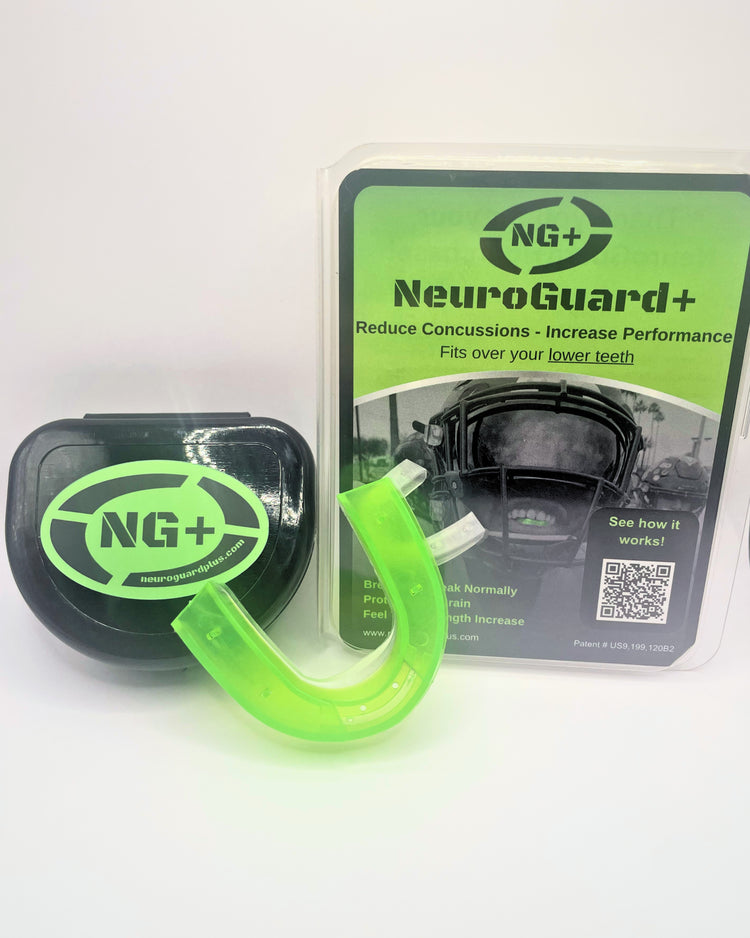
NeuroGuard+ starts from the jaw. It fits on your lower teeth, which holds your jaw in a physiologic position and keeps your airway open. The design is meant to absorb and redirect the G-forces that travel from a hit through your jaw. In football, wrestling, lacrosse, hockey, rugby, or a combat sport, that is the gap athletes point to when they start looking past a thin guard.
Your helmet stops the hit. Your jaw decides where the force goes next.
Your teethcan be fixed.Your braincan't.
The evidence, straight
What's the Real Evidence on Mouthguards and Concussions?
No mouthguard, NeuroGuard+ or SISU, is accepted by major medical groups as proven to prevent concussions. Anyone who says otherwise without a study in hand is selling you something. The fair question is which guard has a design and data aimed at head-impact risk at all. SISU doesn't claim to; NeuroGuard+ does, and publishes its field-study results on its Data & Research page.
Trainers and athletic directors: the full study list lives on the concussion research page, written for staff who have to cite a source to athletes and parents.
Price and rosters
What Does Switching From SISU Cost, for One Athlete or a Roster?
Switching a whole household or team takes one order. The NG+ DoublePack covers a backup guard or a second athlete. NG+ Team Order outfits a full roster at once, so a coach isn't chasing 45 separate purchases before the first practice.
Braces in the picture? NeuroGuard+ is made to be safe with braces and adapts through orthodontic treatment. Ask your orthodontist before the season, whichever guard you choose.
The honest call
When to Choose NeuroGuard+, and When to Stay With SISU
NeuroGuard+ and SISU are both good guards for the right athlete. The choice comes down to one thing: do you want the thinnest guard you can wear, or a guard designed around jaw position for the hits your sport throws at you?
When to choose NeuroGuard+
Choose NeuroGuard+ when head impact is the worry, not just chipped teeth.
- You play football, wrestling, lacrosse, hockey, rugby, or a combat sport and want a guard built around jaw position.
- You're a parent who wants a guard aimed at the brain as well as the teeth.
- Your athlete competes in high school and needs an NFHS-approved guard.
- You're a coach or athletic director outfitting a roster with one team order.
- Your athlete wears braces and needs a guard that works through treatment.
When to choose SISU
Stay with SISU when a thin, comfortable guard is the whole goal.
- The thinnest, lowest-profile guard matters more to you than jaw position.
- Your sport has little head contact and dental protection is the main job.
- You want a remoldable guard you can reshape if the first fit is off.
- Your athlete already wears a SISU all game and has no plan to change.
Switching questions
Questions People Ask About Switching From SISU
These are the questions athletes, parents, and coaches ask when they weigh NeuroGuard+ against SISU.
What should I switch to if I'm done with my SISU mouthguard?
If you want a guard designed around jaw position and head-impact forces, switch to NeuroGuard+. It molds at home, sits on your lower teeth, and lets you talk and breathe with it in. If all you want is a thinner guard, stay with SISU.
Is a SISU mouthguard enough for football, wrestling, or rugby?
SISU protects your teeth and is comfortable enough to keep in, which is the first job of any mouthguard. It makes no jaw-alignment or concussion-reduction claim. If head impact is your worry in a hard-contact sport, NeuroGuard+ is the one of the two designed for it.
Does any mouthguard prevent concussions?
No mouthguard is accepted by major medical groups as proven to prevent concussions. NeuroGuard+ is designed to lower concussion risk through jaw position and publishes its field data on its Data & Research page. SISU makes no concussion claim.
Can you talk and breathe with NeuroGuard+ the way you can with SISU?
Yes. NeuroGuard+ sits on your lower teeth, so you can talk, breathe, drink, and call plays without pulling it out.
Is a $50 mouthguard worth it over a $15 one?
NeuroGuard+ costs $49.97 with a case, a little more than three times a $15 store guard. The difference pays for the patented lower-fit, jaw-alignment design; if you only need basic dental protection, the cheaper guard does that job.
Is NeuroGuard+ allowed in high school sports?
Yes. NeuroGuard+ is NFHS approved for high school competition. Check your sport's own mouthguard rule on the NeuroGuard+ mouthguard rules by sport page before the season starts.
Leave it in. Play your game.
Order NeuroGuard+, mold it in warm water at home, put it on your bottom teeth, and wear it at your next practice.