For athletic directors, trainers, and coaches
Q-Collar vs Mouthguard: Which Does Your Program Need?
The Q-Collar is an FDA-cleared collar worn on the neck. It doesn't cover teeth, so it doesn't replace a mouthguard. NeuroGuard+ is a lower-teeth mouthguard built to reduce concussion risk while athletes talk and breathe through it, but it isn't FDA-cleared. Need a mouthguard anyway? Start with NG+. Need FDA clearance? Add the Q-Collar.

What they share
Both Are Bought to Cut Head-Impact Risk
The Q-Collar and the NeuroGuard+ mouthguard land on the same shortlist because they answer the same worry: protecting the brain, not just the teeth. Neither is a helmet, and both are worn by the athlete through practice and games. For an athletic director, both are part of showing your program took reasonable steps to protect athletes from head injury.
Worn by the athlete
Each one goes on the athlete's body, separate from the helmet, so each one is an added piece of gear your staff has to issue and check.
Aimed at the brain
Both are sold on head-impact risk, which is why parents and sports medicine staff weigh them against each other in the first place.
Only works if it's worn
Gear that sits in a bag protects nobody. Whatever you choose, the real test is whether athletes keep it on from the first snap to the last.
Side by side
Q-Collar vs NeuroGuard+, Point by Point
This comparison covers what an athletic director or head athletic trainer checks first: where each device is worn, whether it protects teeth, whether it carries FDA clearance, whether athletes can talk and breathe with it, and how you order for a roster. The Q-Collar wins on regulatory standing. NeuroGuard+ wins on everything a mouthguard has to do.
| What matters | NeuroGuard+ | Q-Collar |
|---|---|---|
| What it is | Mouthguard | Neck collar |
| Where it's worn | On the lower teeth | Around the neck |
| Covers the teeth | Yes | No |
| FDA-cleared | No | YesQ-Collar's edge |
| Can stand in for a required mouthguard | Yes, where your league's rules allow it | No |
| Positions the jaw | Yes, from the lower teeth | No |
| Talk, breathe, and drink while it's in | Yes, without pulling it out | Doesn't sit in the mouth |
| Fit | Molded at home in warm water | Check with Q-Collar |
| Roster ordering | NG+ Team Order | Check with Q-Collar |
For Q-Collar sizing, pricing, and team ordering, go to Q-Collar directly.
Which Has Stronger Clinical Evidence?
On regulatory standing, the Q-Collar is ahead: it's FDA-cleared, and NeuroGuard+ is not. If your sports medicine lead needs a federal clearance to point to before adding head-impact gear, the Q-Collar has one and NG+ doesn't. That's a real difference, and you should weigh it.
Does a Q-Collar Replace a Mouthguard?
No. The Q-Collar is worn around the neck and doesn't cover the teeth, so it can't fill a required mouthguard slot in any sport that requires one. Your athletes still need a mouthguard either way. The real choice for most programs is which mouthguard, and whether to add a collar on top. NeuroGuard+ keeps a sport-by-sport guide to mouthguard rules so you can check what each team on your roster has to wear.
Which One Will Athletes Actually Keep On?
A bulky upper guard gets spit out, chewed through, or left in a sock, and then it protects nothing. NeuroGuard+ sits on the lower teeth, so athletes can talk, breathe, drink, and call plays without pulling it out. You mold it at home in warm water, with no dentist visit. One guard covers football, wrestling, lacrosse, and the rest of what a multi-sport athlete plays.
The Q-Collar doesn't sit in the mouth, so speech and breathing aren't the question with it. Ask Q-Collar about fit and wear time for your sports before you issue it to a roster.
How Should a Football Program Split the Budget?
A Q-Collar is a separate, added line, not a swap for the mouthguard. If your district or medical staff wants an FDA-cleared device in the program, budget for it on top. Get current Q-Collar pricing from Q-Collar directly; we don't quote another company's prices.
A neck collar can't stand in for a mouthguard. A mouthguard can't give you FDA clearance.
That's the whole trade-off. Most programs need the mouthguard regardless, so pick the one athletes leave in, then decide whether the collar earns a second line in the budget.
Who each one fits
When to Choose Each One
NeuroGuard+ and the Q-Collar fit different needs, and plenty of programs will end up with both. Here's who each one suits, in plain terms.
When to choose NeuroGuard+
Choose NeuroGuard+ when your athletes have to wear a mouthguard anyway and you want that guard working on head-impact risk, not just teeth.
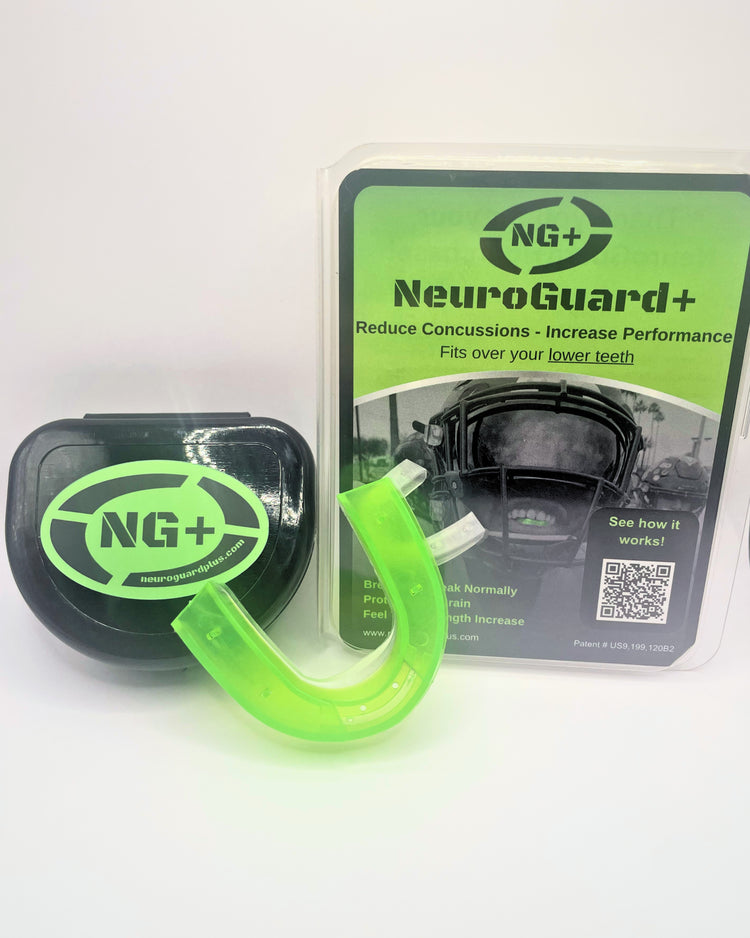
- Your players keep spitting out bulky guards to talk or breathe.
- You outfit several sports and want one guard across all of them.
- You want at-home molding with no dentist appointment.
- You're ordering for a whole roster through NG+ Team Order.
When to choose the Q-Collar
Choose the Q-Collar when FDA clearance is the deciding requirement for your program.
- Your sports medicine staff or district will only add head-impact gear that carries FDA clearance.
- You already have a mouthguard program in place and want an added layer on top of it.
When to use both
The Q-Collar sits on the neck and NeuroGuard+ sits on the lower teeth, so they don't compete for the same spot. Check your league's equipment rules, then run NG+ as the required mouthguard and the Q-Collar as the added device.
FAQ
Questions Athletic Directors Ask
These are the questions programs ask most when they weigh the Q-Collar against a mouthguard like NeuroGuard+.
Is the Q-Collar a mouthguard?
No. The Q-Collar is an FDA-cleared collar worn around the neck. It doesn't cover the teeth, so it can't fill a required mouthguard slot.
Is NeuroGuard+ FDA-cleared?
No. NeuroGuard+ is a mouthguard and doesn't carry FDA clearance. If your program will only add head-impact gear that has FDA clearance, the Q-Collar meets that bar and NeuroGuard+ doesn't.
Can an athlete wear a Q-Collar and a mouthguard at the same time?
The Q-Collar sits on the neck and NeuroGuard+ sits on the lower teeth, so they don't compete for the same spot. Check your league's equipment rules before you add either one.
Which should a football program buy first if the budget covers only one?
Start with the mouthguard, because a neck collar doesn't replace one where a mouthguard is required. Upgrading that line to NeuroGuard+ puts the budget into gear every athlete already has to wear, and a Q-Collar can be added later as a separate line.
Our athletes keep spitting out their mouthguards. What should we switch to?
Switch to NeuroGuard+. It sits on the lower teeth, so athletes can talk, breathe, drink, and call plays without pulling it out, and a guard that stays in is the only one doing its job.
Does any mouthguard prevent concussions?
Major medical groups don't treat any mouthguard as proven to prevent concussions, and that includes NeuroGuard+. NeuroGuard+ is designed to reduce concussion risk by positioning the jaw, and the company publishes the studies behind that on its Data & Research page.
Start with the mouthguard
Your athletes need a mouthguard either way. Make it one they leave in.
Order NeuroGuard+ for one athlete or a full roster. Each guard is molded at home in warm water and sits on the lower teeth from the first rep.