
Patented lower-fit design · NFHS approved
NeuroGuard+ vs Zone: Which Jaw-Alignment Guard Fits You?
For athletes, parents, and coaches comparing the two mouthguards sold on jaw position. Here's how they differ on fit, comfort, price, and evidence, and who each one suits.
NeuroGuard+ and Zone both sell mouthguards built around jaw position. NeuroGuard+ sits on your lower teeth, molds at home in warm water, costs $49.97, and is NFHS approved for high school play. Before you pick either, ask each for its published strength and concussion data: no mouthguard is medically proven to prevent concussions.

Where they start
What NeuroGuard+ and Zone Have in Common
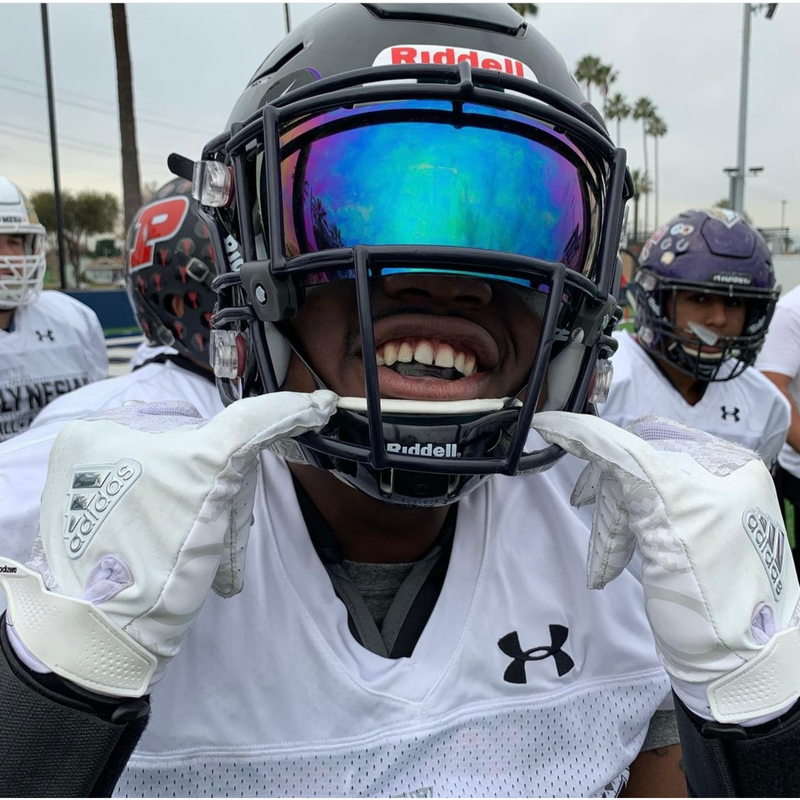
Both are sold on one idea: where your jaw sits changes how your body braces, under a bar and under a hit. That puts NeuroGuard+ and Zone in the same small group of performance mouthguards, next to the Under Armour mouthpiece that is now largely discontinued and hard to buy. Both still do the first job of any mouthguard, covering teeth in contact. The real differences are which teeth the guard sits on, how you fit it, what it costs, and what evidence stands behind it.

Side by side
NeuroGuard+ vs Zone, Point by Point
This table compares NeuroGuard+ with Zone on what buyers ask about most: jaw position, comfort, fit, league approval, price, and evidence. The NeuroGuard+ column comes from its own product and research pages. The Zone column lists what to confirm on Zone's own site, because NeuroGuard+ won't quote a competitor's claims secondhand.
| What matters | NeuroGuard+ | Zone: what to confirm |
|---|---|---|
| Which teeth it sits on | Lower teeth | Upper or lower teeth |
| How it sets jaw position | Patented lower-fit design that holds the jaw in its physiologic position | How the design positions the jaw, and whether it's patented |
| Talking and breathing with it in | Talk, breathe, drink, and call plays without taking it out | Whether you can talk and drink with it in |
| Fitting | Mold at home in warm water, with a step-by-step fitting guide | At-home molding or a dental impression |
| High school play | NFHS approved for high school competition | Your league's rule on Zone |
| FDA clearance | Not FDA-cleared | Whether Zone holds any clearance |
| Price for one athlete | $49.97, case included | Zone's current price |
| Team buying | NG+ DoublePack and NeuroGuard+ Team Order | Whether Zone sells team orders |
| Published evidence | Studies posted on the NeuroGuard+ Data & Research page | Peer-reviewed studies you can read in full |
On a phone, swipe the table sideways to see every column.
Performance
Does Putting Your Jaw in Position Make You Stronger?
NeuroGuard+ says yes, and builds the whole guard around that claim. It sits on your lower teeth and holds your jaw in what NeuroGuard+ calls its physiologic position: no clenching, no biting down, just a locked-in fit. NeuroGuard+ ties that position to strength, stamina, and balance, and posts the supporting work on its Data & Research page. Zone makes its own jaw-alignment case, so hold it to the same standard.
Here's the test for either brand. A lifter chasing a legal edge, or a fighter weighing Zone against the old Under Armour mouthpiece, should see a measured result with a source before paying for either. Ask three things:
- What was tested: grip, lift, balance, or endurance?
- On how many athletes, and against what comparison?
- Who ran the study, and where can you read it?
Protection and evidence
Does Either Mouthguard Prevent Concussions?
No mouthguard is medically proven to prevent concussions, and that includes NeuroGuard+ and Zone. That's the position of major medical consensus, and it's why athletic trainers push back on concussion marketing. NeuroGuard+ is engineered to absorb and redirect the G-forces that travel through the jaw toward the brain, and it posts its field study results on its concussion research page. Read them, then ask Zone for the same before you trust either one with your athlete's brain.
If you need a device with FDA clearance, NeuroGuard+ doesn't have it. The Q-Collar, a neck collar, does. For a school or program that has to show it did everything reasonable, the honest record is this: NeuroGuard+ is NFHS approved for high school competition, publishes its research, and doesn't claim FDA clearance.
Comfort and fit
Will Your Athlete Actually Keep It In?
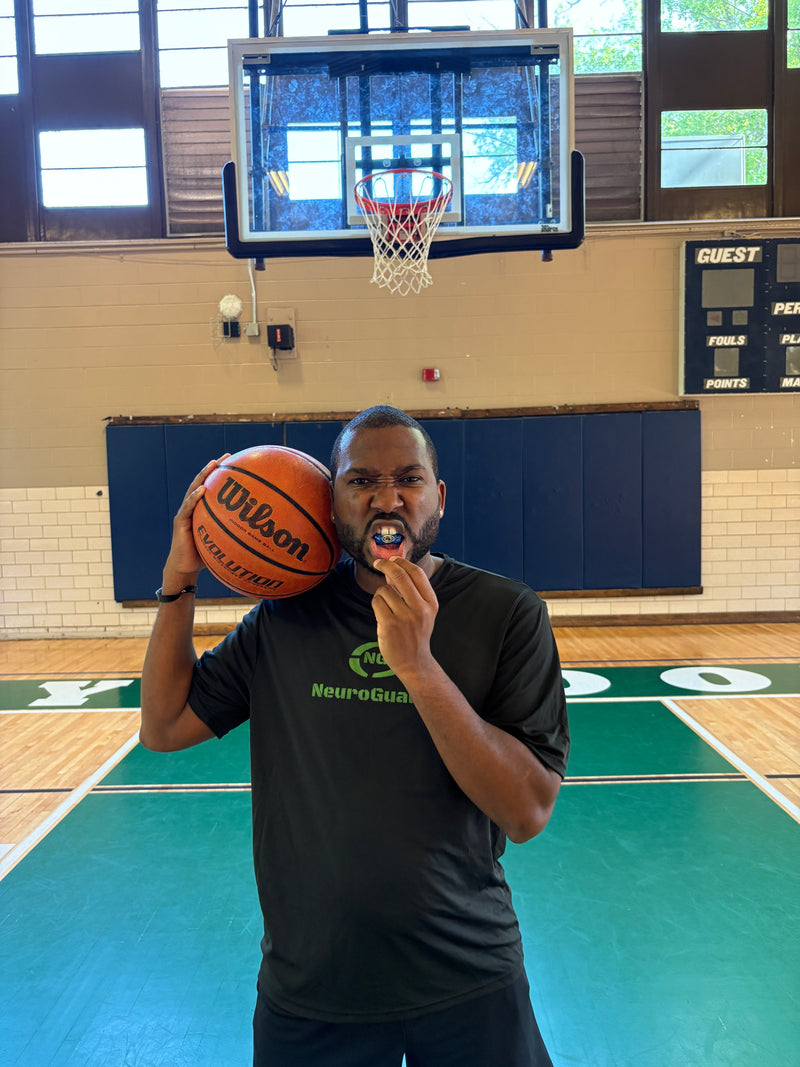
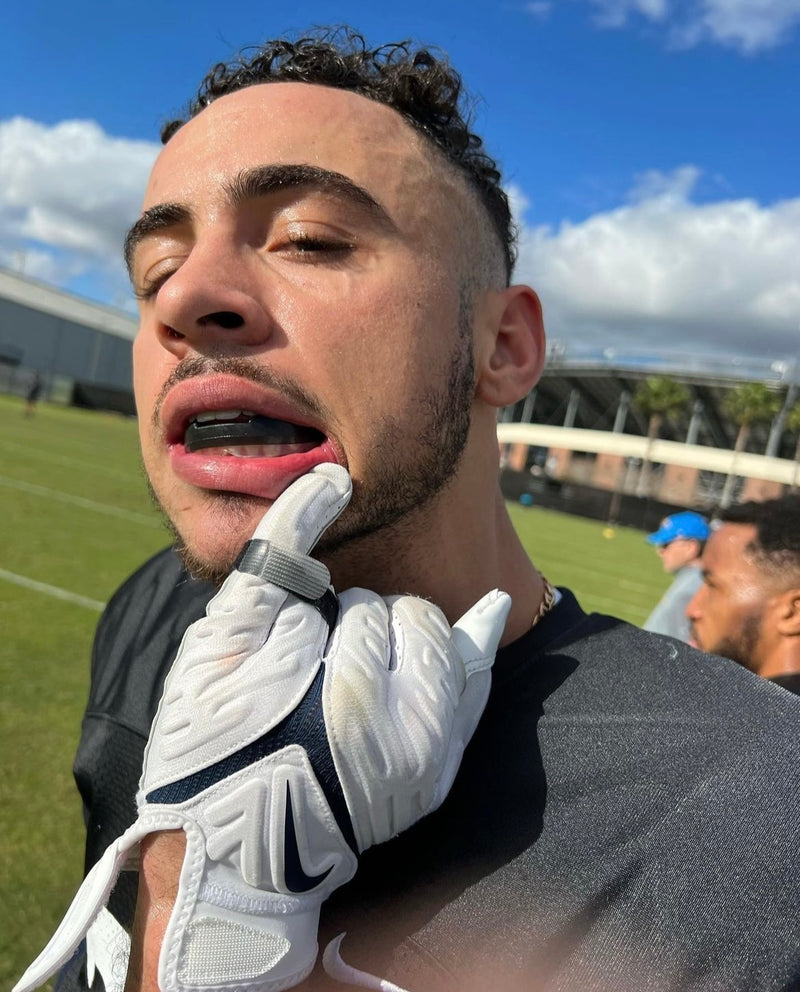
NeuroGuard+ is built for exactly this. Because it sits on the lower teeth, you can talk, breathe, drink, and call plays without breaking rhythm. Most mouthguards spend the game in a sock, and a guard that gets spit out between plays protects nothing. Ask Zone the same question, and if you can, have your athlete try talking with each one in.
How to Fit NeuroGuard+ at Home
You mold NeuroGuard+ yourself, with no trip to the dentist.
- Warm it.Soften the guard in warm water, following the NeuroGuard+ fitting guide.
- Set it on your bottom teeth.Press it into place so it molds to your lower teeth.
- Check it.Talk and breathe with it in. If it feels loose, go back through the fitting guide before your next practice.
Price
What Does Each One Cost?

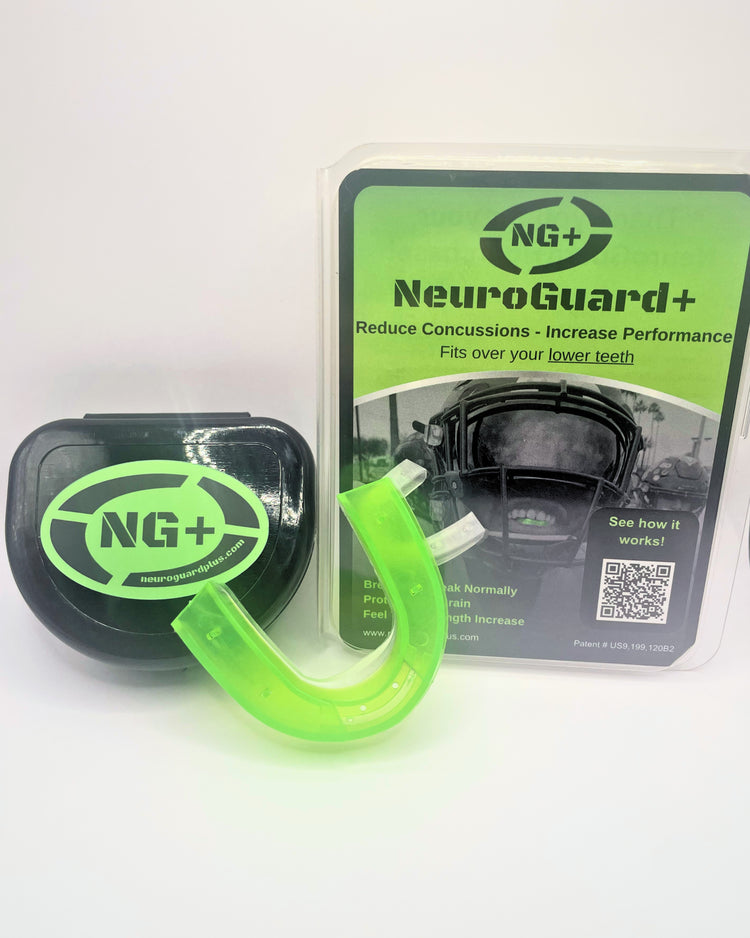
NeuroGuard+ Mouthguard
$49.97
One guard, case included. For the athlete who needs one guard across every sport they play.

NG+ DoublePack
Two guards, so a spare is in the bag when one goes missing mid-season.
NeuroGuard+ Team Order
One order for a full roster, for coaches and athletic directors outfitting a team for the season.
Who should buy each
Which One Fits Your Athlete?
The right guard is the one your athlete will wear, in a design you can explain to a parent or a trainer. NeuroGuard+ and Zone suit different buyers, and some buyers are better served by neither.
When to Choose NeuroGuard+
Choose NeuroGuard+ if your athlete spits out every guard because they can't talk or breathe with it in. It fits buyers who want a lower-teeth design molded at home, and coaches who need an NFHS-approved guard for a high school roster. One guard covers football, wrestling, lacrosse, hockey, and the rest of your athlete's season.
When to Choose Zone
Choose Zone if it shows you measured strength or fit results that answer your question better than NeuroGuard+ does. If your athlete already wears Zone and keeps it in every rep and every play, that counts for more than any spec. A guard that stays in your mouth protects more than a better one left in the bag.
When to Choose Something Else
If you want a lab-made fit from a dental impression, a mail-order custom guard like Gladiator fits more precisely, though it takes longer to arrive. If FDA clearance is a must, look at the Q-Collar. If you only need to protect teeth on a tight budget, a $15 to $25 Shock Doctor guard does that job.
FAQ
Questions People Ask About NeuroGuard+ and Zone
These are the questions athletes, parents, and trainers ask most when they compare jaw-alignment mouthguards.
Is NeuroGuard+ a jaw-alignment mouthguard?
Yes. NeuroGuard+ sits on your lower teeth and uses a patented lower-fit design to hold your jaw in its physiologic position. It's the same idea Zone and the old Under Armour mouthpiece are sold on.
Can a mouthguard prevent concussions?
No mouthguard, including NeuroGuard+ or Zone, is medically proven to prevent concussions. NeuroGuard+ publishes its field study results on its concussion research page so you can read the methods yourself.
Is NeuroGuard+ allowed in high school games?
Yes. NeuroGuard+ is NFHS approved for high school competition. For club, college, or pro play, check your league's rule on the NeuroGuard+ mouthguard rules by sport page.
What happened to the Under Armour performance mouthpiece?
Under Armour's jaw-repositioning mouthpiece (ArmourBite) is largely discontinued and hard to buy. Athletes who wore it now compare newer jaw-alignment guards such as NeuroGuard+ and Zone.
Is a $50 mouthguard worth it over a $15 one?
It is if your athlete won't keep the cheap one in. NeuroGuard+ costs $49.97 and sits on the lower teeth so you can talk and breathe with it in. A $15 to $25 drugstore guard protects teeth but often ends up in a sock.
Your move
Leave It In and Play Your Game
Order NeuroGuard+, mold it at home in warm water, and wear it at your next practice.


