
Comparison · For athletic directors & trainers
NeuroGuard+ vs Q-CollarWhich Fits Your Program?
One goes on the lower teeth. One goes around the neck. Here's how they compare on protection, evidence, fit, and price, so you can decide what your athletes wear this season.
NeuroGuard+ is a mouthguard that sits on the lower teeth; the Q-Collar is an FDA-cleared collar worn around the neck. Choose the Q-Collar if regulatory clearance is your deciding factor. Choose NeuroGuard+ if you need the mouthguard your sport's rules call for, at $49.97 per athlete. Because they sit in different places, an athlete can wear both.
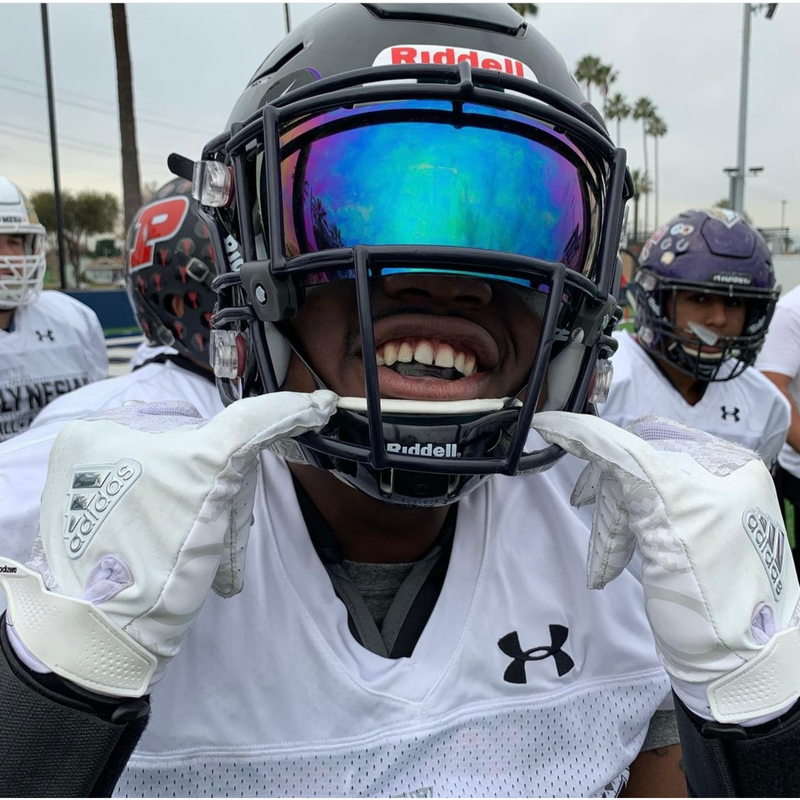
Same worry, different spot
What Do NeuroGuard+ and the Q-Collar Have in Common?
Both are bought for the same reason: head impacts in contact sports, and the fear of what they do to a young athlete's brain. Both land on the same shortlist when an athletic director or trainer asks what gear can do more than a helmet alone. Both are worn by the athlete during play. Past that shared goal, they are different kinds of device, worn on different parts of the body.
Lower teeth
NeuroGuard+ is a mouthguard. It protects the teeth and holds the jaw in position.
Around the neck
Q-Collar is an FDA-cleared collar. Nothing goes in the mouth.
Side by side
NeuroGuard+ vs Q-Collar, Point by Point
This table compares NeuroGuard+ and the Q-Collar on where each is worn, what each protects, regulatory standing, sport rules, comfort, fit, and cost per athlete. The Q-Collar leads on FDA clearance. NeuroGuard+ leads on protecting teeth and counting as the mouthguard your sport requires. Where a Q-Collar detail comes from Q-Collar itself, go to their own materials.
| What matters | NeuroGuard+ | Q-Collar |
|---|---|---|
| Where it's worn | On the lower teeth | Around the neck |
| Protects the teeth | ||
| FDA-cleared | ||
| NFHS approved for high school competition | Not a mouthguard; check your state association | |
| Fills the mouthguard your sport requires | ||
| Talking and breathing while worn | Lower-teeth fit keeps the airway open; athletes call plays with it in | Nothing in the mouth |
| Fit | Molded at home in warm water | Sized to the neck; see Q-Collar's sizing guide |
| Price per athlete | $49.97, case included | Set by Q-Collar; see their site |
| Roster ordering | NG+ Team Order and NG+ DoublePack | See Q-Collar for team options |
NeuroGuard+ details from neuroguardplus.com, September 2026. Q-Collar's FDA clearance as publicly reported; confirm its cleared use with Q-Collar.
What Does Each Device Actually Protect?
NeuroGuard+ does two jobs at once. Like any mouthguard, it protects the teeth. Its lower-teeth design also places the jaw in what the company calls its physiologic position, built to absorb and redirect the G-forces that travel toward the brain on a hit. In the company's words: protect the brain, not just the teeth.
The Q-Collar does nothing for the teeth, because nothing goes in the mouth. It's worn around the neck, and its case rests on its FDA clearance. For a trainer, that means a collar sits alongside a mouthguard, never in place of one. In sports whose rules call for a mouthguard, the collar doesn't fill that slot, and you are still choosing a guard. See mouthguard rules by sport for what each sport requires.
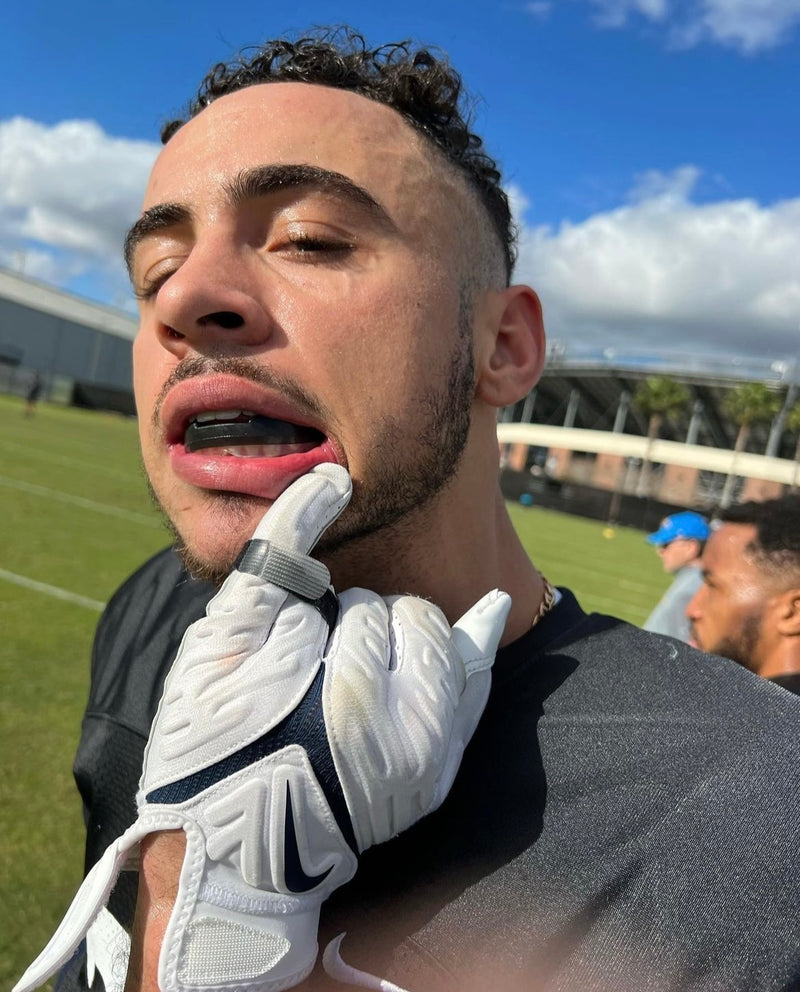
Evidence
Which Has Stronger Clinical Evidence?
On regulatory standing, the Q-Collar is ahead. It carries FDA clearance. NeuroGuard+ does not.
That is the clearest difference between the two devices, and we'd rather you hear it from us. If your district or board requires an FDA-cleared device before it will back a head-impact claim, the Q-Collar is the one that meets that bar today. What NeuroGuard+ has is a medical patent, NFHS approval for high school play, and published field data you can read and judge for yourself.
What stands behind NeuroGuard+
No mouthguard, NG+ included, is accepted by major medical bodies as proven to prevent concussions. Cite NG+ to your athletes as a study finding, never as a guarantee.
What stands behind the Q-Collar
The Q-Collar's FDA clearance means the agency reviewed it for a specific cleared use. That use, and the studies behind it, are Q-Collar's to state, so read them in Q-Collar's own materials rather than in a competitor's summary.
Ask the same questions of both: who was studied, in which sport, and what outcome was measured.

Comfort & fit
Will Your Athletes Actually Keep It In?
A mouthguard only protects when it's in the mouth, and bulky upper guards are the ones that end up in a sock by the second quarter. NeuroGuard+ sits on the lower teeth, so athletes can talk, breathe, drink, and call plays without pulling it out. That matters to a trainer more than any spec: a guard that stays in all game is the one doing its job.
- Mold it in warm water.
- Put it on your bottom teeth.
- Call the play without pulling it out.
Fit happens at home or in the locker room, with no dentist visit. The Q-Collar keeps the mouth clear entirely, which is a real comfort advantage; ask Q-Collar about sizing and wear under pads for your sport. See How to Fit the NG+ for the full molding steps.
Price
What Does It Cost to Outfit a Roster?

NeuroGuard+ Mouthguard
$49.97
One guard, case included. Fits on the lower teeth.
Shop NG+
NG+ DoublePack
Two guards: a spare for mid-season, or one for each athlete in the house.
See the DoublePackNG+ Team Order
Outfit the whole roster in one order for the season. Contact the team for a quote.
Ask about Team OrderWho should buy each
When Should You Choose NeuroGuard+, and When the Q-Collar?
Choose by what your program has to prove and what your athletes will actually wear. NeuroGuard+ fits programs that need a mouthguard anyway and want one athletes keep in. The Q-Collar fits programs where FDA clearance is the deciding line.
When to choose NeuroGuard+
You're a trainer, coach, or athletic director who has to put a mouthguard in every athlete's mouth anyway.
- Your sport's rules call for a mouthguard, and you want one that is NFHS approved for high school competition.
- Your athletes spit out or chew through bulky guards, and you need one they can talk and breathe through.
- You're budgeting per athlete at $49.97, with NG+ Team Order for the roster.
- You run several sports and want one guard across football, wrestling, lacrosse, hockey, and more.
When to choose the Q-Collar
You're a sports medicine lead or athletic director whose policy sets the bar at regulatory clearance.
- Your district, board, or medical staff requires an FDA-cleared device before backing a head-impact claim.
- Your athletes already wear a mouthguard, and you're looking at an addition worn outside the mouth.
- Your sport doesn't call for a mouthguard, and teeth protection isn't the gap you're trying to close.
Choosing both? NeuroGuard+ sits on the lower teeth and the Q-Collar sits around the neck, so picking the collar still leaves you picking a mouthguard for every sport that requires one.
Questions people ask
NeuroGuard+ vs Q-Collar: Common Questions
Short answers for athletic directors, trainers, and parents weighing a mouthguard against a neck collar.
Is the Q-Collar a mouthguard?
No. The Q-Collar is a collar worn around the neck, and NeuroGuard+ is a mouthguard worn on the lower teeth. The Q-Collar does not protect the teeth and does not stand in for a mouthguard in sports whose rules call for one.
Is NeuroGuard+ FDA-cleared like the Q-Collar?
No. The Q-Collar has FDA clearance and NeuroGuard+ does not. NeuroGuard+ is medically patented and NFHS approved for high school competition.
Can an athlete wear NeuroGuard+ and a Q-Collar at the same time?
Yes. NeuroGuard+ sits on the lower teeth and the Q-Collar sits around the neck, so they don't compete for the same spot. Check Q-Collar's own guidance on wearing it with pads and other equipment.
Does NeuroGuard+ prevent concussions?
No mouthguard, NeuroGuard+ included, is proven to prevent concussions. NeuroGuard+ is designed to hold the jaw in a physiologic position and redirect G-forces, and the company publishes its field data on its Data & Research page.
Which costs less to outfit a whole team?
NeuroGuard+ costs $49.97 per athlete, and NG+ Team Order handles roster-size orders. Q-Collar sets its own pricing, so compare the per-athlete cost of each before you set the season budget.
Your Teeth Can Be Fixed. Your Brain Can't.
Whatever you decide about a collar, your athletes still need a mouthguard they'll keep in. Put NeuroGuard+ on the lower teeth and let them play their game.


